Wrapping lines are an essential element in industrial processes, especially in the final stage of production. Their main function is to unify, protect, and secure palletized loads before transport or storage, ensuring they reach the end customer in perfect condition.
At IHRESS, we analyze each operation to provide wrapping solutions that combine speed, safety, and precision.
Product analysis: protection tailored to each need
Each type of load requires a specific wrapping system. For this reason, we carry out a detailed analysis of the product to determine:
The required level of load containment
The amount and tension of the film
The ideal machine type based on load behavior during movement
Heavier loads typically require less film pressure, while more unstable loads need greater support, more wraps, and more secure wrapping profiles. This customization ensures optimal protection for every pallet.
Wrapping line study: solutions based on production and load type
The design of wrapping lines must adapt to several key factors:
Production speed
Type of product to be wrapped
Customer logistics requirements
Existing level of automation in the plant
At IHRESS, we analyze the entire production flow and propose the most efficient solution for the end-of-line stage, ensuring that wrapping is solid, consistent, and aligned with transport standards.
Line manufacturing: speed, versatility, and continuity
Wrapping is a critical process that must not slow down production. That is why we develop lines that stand out for:
High wrapping speed
Fast program changes and versatility for different load types
Integration with conveyors, scanners, weighing systems, and palletizing systems
Easy maintenance and robust design
We offer solutions for all production levels, from semi-automatic lines to fully automated systems with intelligent control and optimized film consumption.
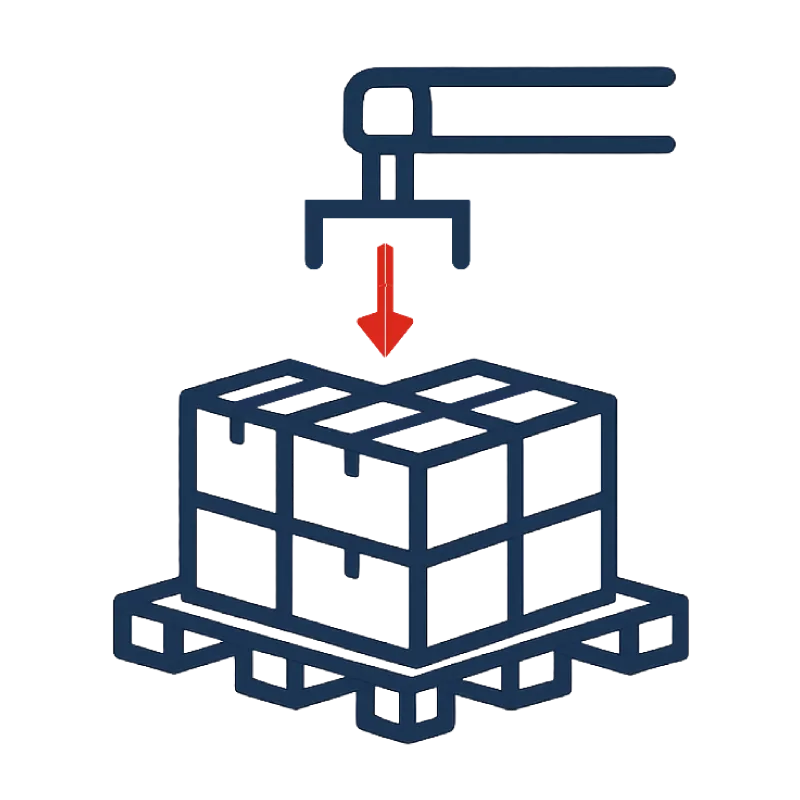
A wrapping line is an automated system that applies stretch film around palletized loads to protect, stabilize, and prepare them for transport or storage. It is the final key step in an industrial end-of-line process.
Wrapping ensures that loads arrive in perfect condition by preventing shifting, falls, or damage during transport. It also improves logistics efficiency and reduces costs associated with incidents or returns.
Yes. Solutions are designed according to required speed, from low or medium production to high-speed lines. Automation is adapted to the logistics flow without creating bottlenecks.
Take the next step toward more efficient production
If you are looking to accelerate your packaging process, improve quality, and increase profitability, implementing a case forming line is the ideal solution. With faster, more precise, and consistent production, your company can compete more effectively, deliver higher-quality products, and maximize profit margins.
Para ofrecer las mejores experiencias, utilizamos tecnologías como las cookies para almacenar y/o acceder a la información del dispositivo. El consentimiento de estas tecnologías nos permitirá procesar datos como el comportamiento de navegación o las identificaciones únicas en este sitio. No consentir o retirar el consentimiento, puede afectar negativamente a ciertas características y funciones.
Funcional
Always active
El almacenamiento o acceso técnico es estrictamente necesario para el propósito legítimo de permitir el uso de un servicio específico explícitamente solicitado por el abonado o usuario, o con el único propósito de llevar a cabo la transmisión de una comunicación a través de una red de comunicaciones electrónicas.
Preferencias
El almacenamiento o acceso técnico es necesario para la finalidad legítima de almacenar preferencias no solicitadas por el abonado o usuario.
Estadísticas
El almacenamiento o acceso técnico que es utilizado exclusivamente con fines estadísticos.El almacenamiento o acceso técnico que se utiliza exclusivamente con fines estadísticos anónimos. Sin un requerimiento, el cumplimiento voluntario por parte de tu proveedor de servicios de Internet, o los registros adicionales de un tercero, la información almacenada o recuperada sólo para este propósito no se puede utilizar para identificarte.
Marketing
El almacenamiento o acceso técnico es necesario para crear perfiles de usuario para enviar publicidad, o para rastrear al usuario en una web o en varias web con fines de marketing similares.