
Why does 2026 mark a turning point?
Industrial automation is no longer a competitive advantage reserved for large corporations. In 2026, it has become a critical factor for survival and growth for industrial companies of all sizes. The difference is no longer whether to automate, but how to do it in a smart, flexible, and scalable way.
The companies leading the market today are not necessarily those that have invested the most, but those that have made the best strategic decisions in automation. This article analyzes what those companies are actually doing in 2026, which technologies they prioritize, and which mistakes they avoid.
From automating machines to automating decisions
For years, industrial automation focused on replacing manual tasks with machines. In 2026, that approach has become obsolete.
The new paradigm is based on:
- Systems that adapt to process variability
- Automation capable of making basic decisions in real time
- Data integration to improve productivity, quality, and maintenance
Leading companies do not automate for the sake of automation: they automate to gain control, flexibility, and predictability.
The 5 key trends in industrial automation in 2026
1. Collaborative robotics applied to real processes
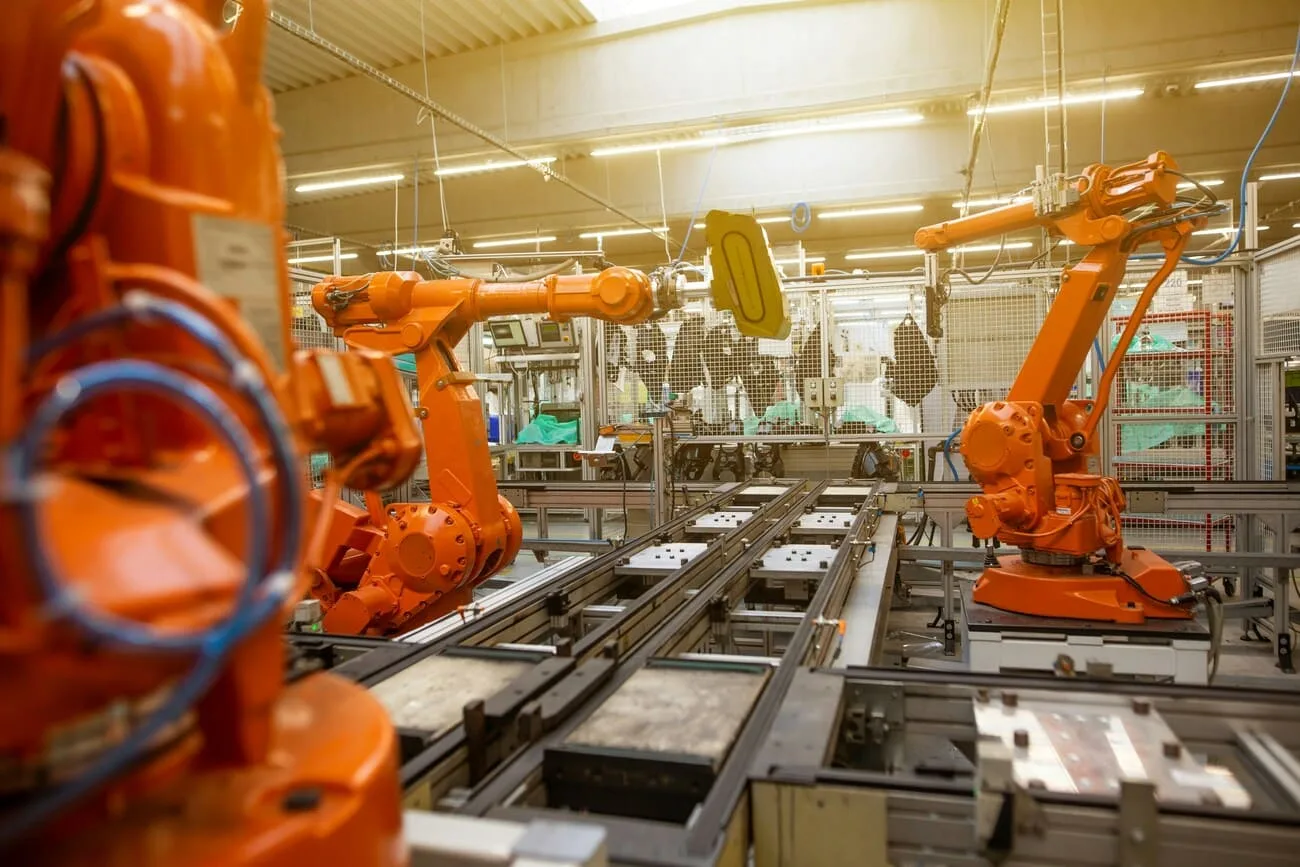
Cobots have moved beyond being a technological showcase to becoming a mature industrial tool. In 2026, they are mainly used for:
- Repetitive handling
- Machine feeding
- Flexible end-of-line operations
Their success lies in enabling automation without completely redesigning the production process.
2. Intelligent and flexible palletizing
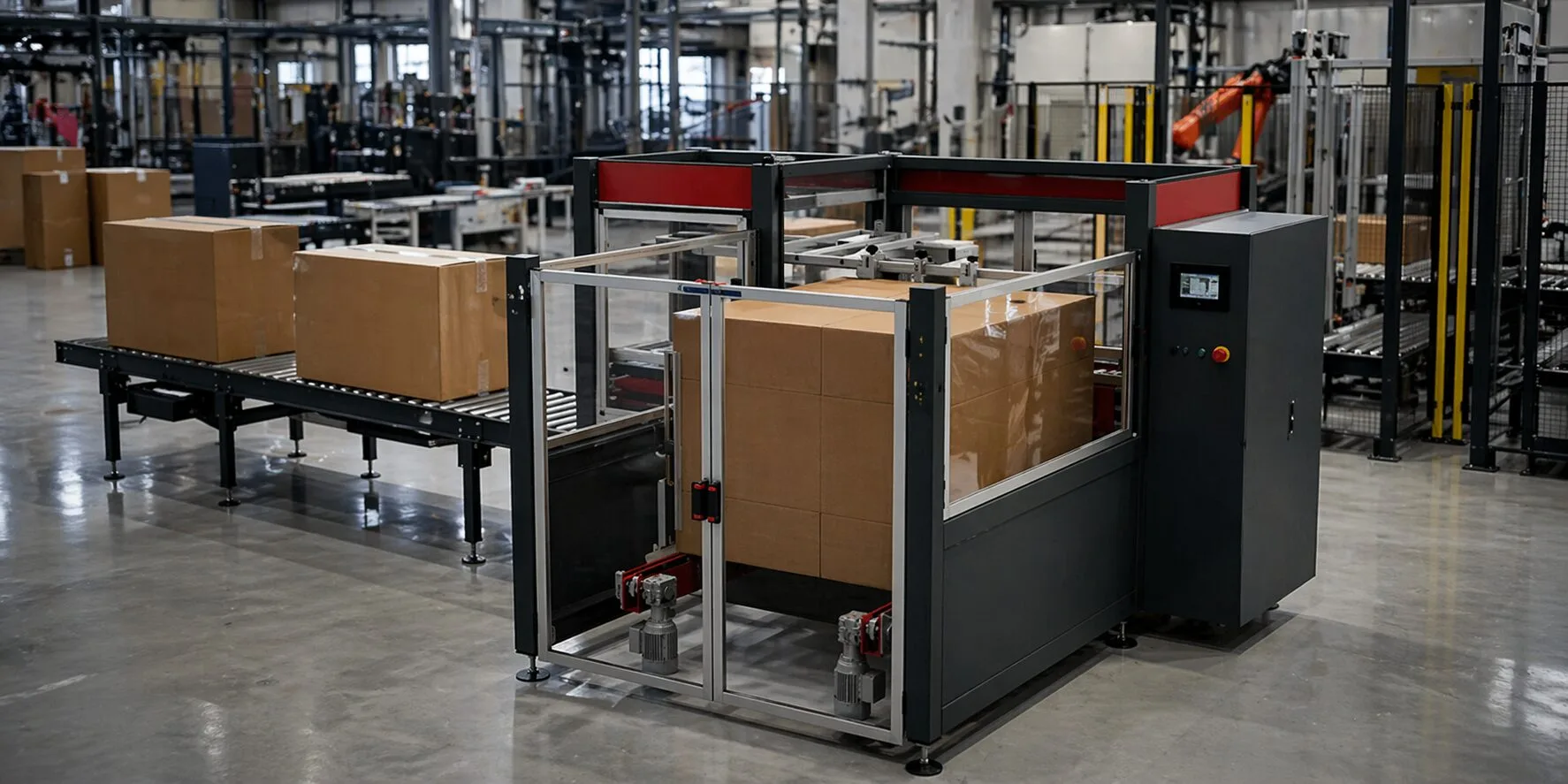
Palletizing is one of the first processes companies choose to automate, and not by chance. In 2026, the approach has evolved towards:
- Robotic palletizing systems adaptable to multiple formats
- Fast product changeovers without long downtimes
- Integration with management and traceability systems
The goal is no longer just to move boxes, but to optimize the entire end-of-line.
3. Integration of artificial intelligence into industrial systems
Artificial intelligence has begun to be practically integrated into industry:
- Production pattern optimization
- Early error detection
- Predictive maintenance
The companies that benefit most from AI are those that integrate it as support for automation, not as an isolated layer.
4. Automation designed for industrial SMEs
In 2026, automation is no longer designed exclusively for high volumes. The most in-demand solutions are:
- Modular
- Scalable
- Adaptable to business growth
This has allowed many industrial SMEs to access technologies that once seemed out of reach.
5. Connectivity and real-time data
Modern automation does not work without data. Leading companies invest in:
- Connected systems
- Real-time data visualization
- Continuous performance analysis
Automation is no longer a “black box” but a source of strategic information.
What the most efficient companies automate first
In 2026, top-performing companies follow a clear pattern when prioritizing automation projects:
- End-of-line processes (palletizing, case packing, wrapping)
- Highly repetitive tasks
- Operations with labor shortages or high turnover
- Bottlenecks limiting growth
Automating these areas delivers fast returns and reduces operational risks.
Common mistakes when automating in 2026
Despite technological advances, many projects fail due to poor strategic decisions:
- Automating without considering future scalability
- Choosing oversized solutions
- Not integrating automation with existing systems
- Ignoring staff training
Leading companies understand that automation is a process, not a one-time purchase.
How IHRESS approaches industrial automation in 2026
At IHRESS, industrial automation in 2026 is understood as a strategic tool, not an end in itself.
The approach is based on:
- Prior analysis of the production process
- Modular and evolving solutions
- Integration of robotics, automation, and data
- Long-term technical support
The objective is clear: to create systems that work today and remain valid tomorrow.
Conclusion: automate for the next five years
Industrial automation in 2026 is not about adopting the latest technology, but about making smart and sustainable decisions.
The companies leading the market understand that automation:
- Reduces operational dependency
- Improves competitiveness
- Prepares industry for the future
Investing wisely today is the difference between adapting to change or falling behind.
Frequently Asked Questions (FAQs)
WHAT IS INDUSTRIAL AUTOMATION IN 2026?
Industrial automation in 2026 is based on flexible, connected, and scalable systems that not only perform repetitive tasks but also enable basic operational decision-making in real time. Its goal is to improve productivity, reduce labor dependency, and prepare companies for future changes.
WHY IS INDUSTRIAL AUTOMATION KEY TO COMPETITIVENESS IN 2026?
Because companies face higher operating costs, a shortage of skilled labor, and increased demand variability. Automation enables efficiency, ensures quality, and allows rapid adaptation to market changes.
WHICH INDUSTRIAL PROCESSES SHOULD BE AUTOMATED FIRST?
In 2026, the first processes to be automated are end-of-line operations (palletizing, case packing, wrapping), highly repetitive tasks, processes with high staff turnover, and those that create bottlenecks in production.
IS INDUSTRIAL AUTOMATION ONLY FOR LARGE COMPANIES?
No. In 2026, there are automation solutions specifically designed for industrial SMEs, with modular and scalable systems that allow companies to start with a controlled investment and grow progressively.
WHAT ROLE DOES COLLABORATIVE ROBOTICS PLAY TODAY?
Collaborative robotics enables process automation without major plant modifications and with high flexibility. In 2026, cobots are mainly used for product handling, machine feeding, and end-of-line operations.
HOW DOES IHRESS APPROACH INDUSTRIAL AUTOMATION PROJECTS?
IHRESS approaches industrial automation from a strategic perspective, analyzing each production process and designing modular, scalable solutions tailored to each company’s real objectives.
Do you want to know how to apply these trends to your specific industrial process?
At IHRESS, we help companies design automation solutions adapted to their production reality and growth objectives.