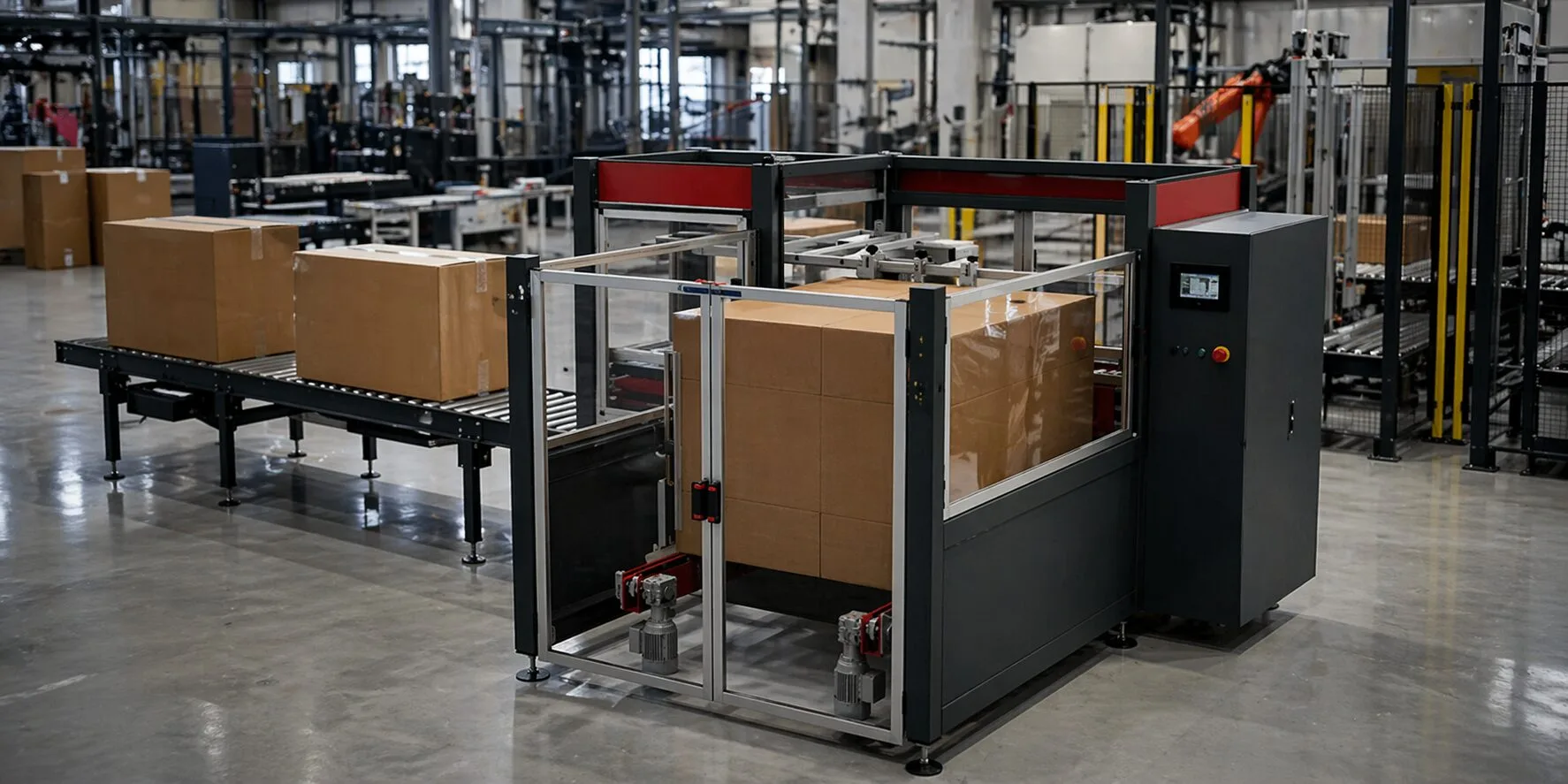

In today’s industry, where efficiency and speed are key factors, optimizing the end of the line is a top priority. In this context, understanding the advantages of a case erector allows many companies to take the step toward automation without taking unnecessary risks.
Beyond replacing manual labor, a case erector improves productivity, packaging quality, and business scalability.
What problem does a case erector solve?
Manual case forming often leads to inefficiencies:
- Irregular work pace
- Assembly errors
- Line stoppages
- High operating costs
Automating this process makes it possible to standardize and stabilize the entire packaging line from the very beginning.
Main advantages of a case erector
1. Consistent, uninterrupted production
One of the main advantages of a case erector is its ability to maintain a continuous workflow.
Example: The iBEM200, thanks to its vacuum suction system, ensures stable and continuous case picking and forming, reaching up to 10 cases per minute without interruptions.
This eliminates the typical bottlenecks of manual processes.
2. Cost reduction with controlled investment
Automation does not always require large investments. There are solutions designed for gradual implementation.
Use case: The iBEM200 is designed for companies that want to automate without a significant upfront investment, maintaining a balance between cost and performance.
- Low energy consumption (0.5 kW)
- Efficient operation with standard compressed air (6 bar)
- Reliable industrial components (FESTO and AIRTAC)
3. High speed in demanding industrial environments
As production volume increases, speed becomes a critical factor.
Advanced example: The iBEM200-RB with robotic arm can reach up to 30 cases per minute, integrating seamlessly into high-performance automated lines.
Thanks to its technology:
- Reduces human error
- Minimizes unplanned downtime
- Maintains consistent precision
It is an ideal solution for:
- Logistics Centers
- Automated warehouses
- High-output production plants
4. Improved packaging quality and consistency
A poorly formed case can affect the entire downstream process: sealing, transport, or palletizing.
Case erectors ensure:
- Precise flap folding
- Uniform sealing quality
- Consistent structure
Example: Models like the iBEM300 guarantee uniform bottom sealing even for large-format cases—critical for heavy loads or bulky products.
5. Adaptation to different production needs
Not all companies have the same requirements. Another key advantage is the variety of available solutions.
Specific examples:
Medium production (versatility)
iBEM200
- Manual adjustment
- Ideal for multiple formats
- Accessible automation
High production (full automation)
iBEM200-RB
- Automatic adjustment
- High speed
- Integration into complete packaging lines
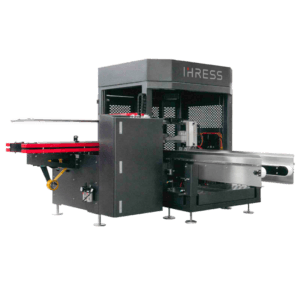
Bulky products (specialization)
- Up to 6 cases/minute
- Designed for large formats
- Reinforced forming and sealing system
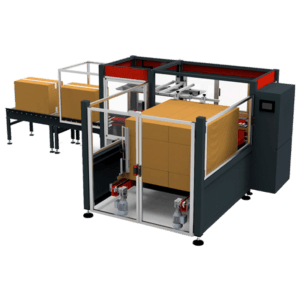
6. Scalability and business growth
A company that automates case forming is prepared to grow without increasing workforce dependency.
This enables:
- Handling demand peaks
- Improving delivery times
- Optimizing resources
7. Integration into complete packaging lines
A case erector does not operate in isolation—it is the starting point of an automated line.
It can be integrated with:
- Semi-Automatic
- Wrapping machines
- Palletizing systems
Result:
A continuous flow from case forming to the end of the line.
Which case erector does your company need?
Choosing the right solution mainly depends on production volume and product type:
- Companies starting to automate → iBEM200
- High-demand companies → iBEM200-RB
- Companies handling large or heavy products → iBEM300
Conclusion
Understanding the advantages of a case erector is the first step toward optimizing industrial packaging. It’s not just about automation—it’s about improving overall process efficiency.
With solutions like the ones we offer, automation can be tailored to every need, from small-scale production to high-performance industrial lines.
Frequently Asked Questions (FAQs)
WHAT ARE THE ADVANTAGES OF A CASE ERECTOR?
It increases productivity, reduces costs, improves packaging quality, and automates end-of-line operations.
WHAT IS THE DIFFERENCE BETWEEN A BASIC AND A ROBOTIC CASE ERECTOR?
Basic case erectors operate at lower speeds with manual adjustments, while robotic ones offer higher speed, precision, and automation.
WHAT TYPE OF COMPANY NEEDS A CASE ERECTOR?
Any company with medium to high packaging volumes, especially in logistics, food, or industrial sectors.
Find the right case sealing solution for your line
Contact us and we will help you carry out the analysis with no obligation.
Request a free consultation