
End-of-line automation is a priority for many companies looking to improve efficiency, reduce labor costs, and prevent injuries caused by repetitive tasks.
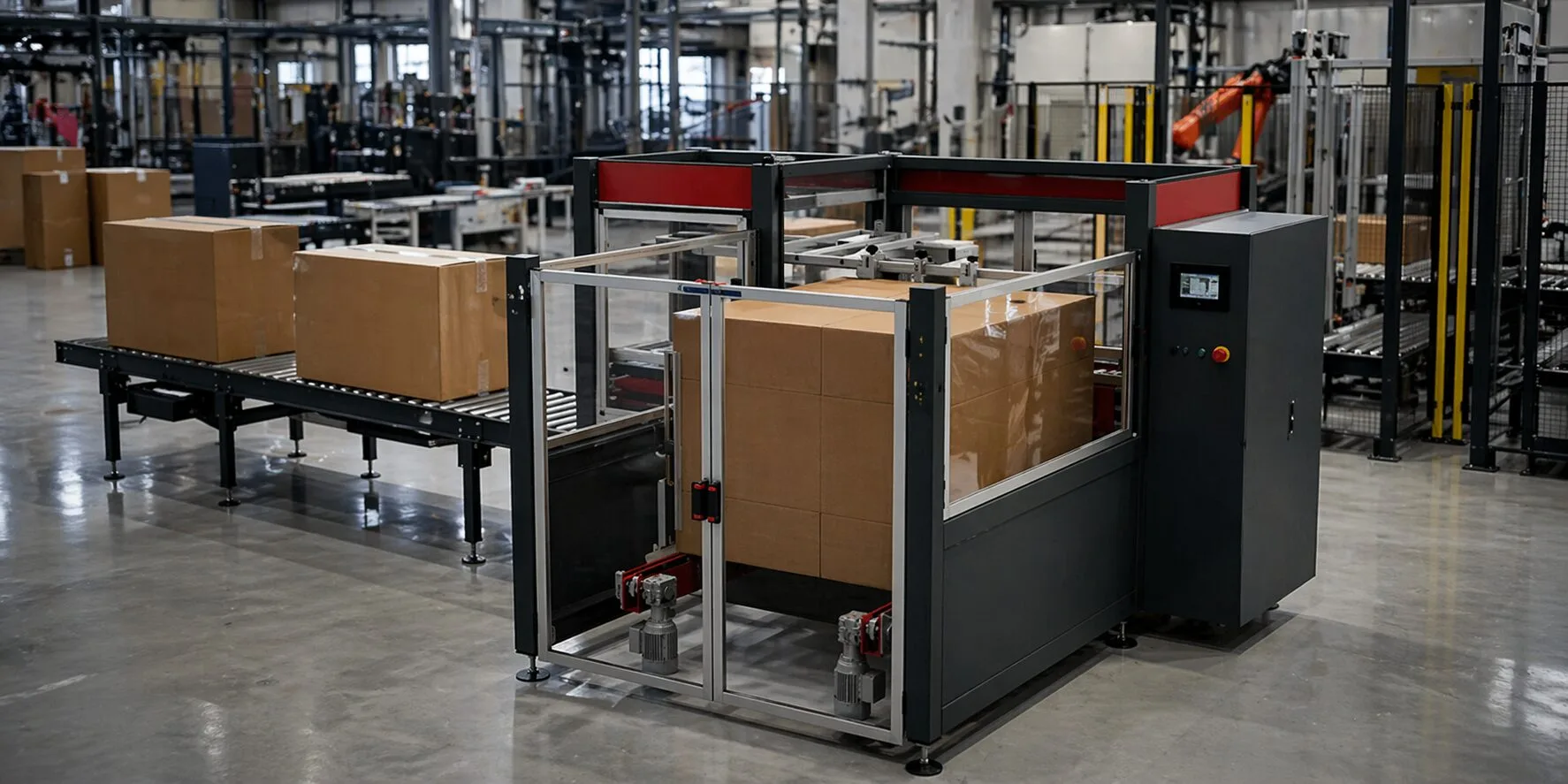
One of the processes that has been most automated in recent years is palletizing, that is, the automatic stacking of boxes, bags, or products onto pallets for transport or storage.
In this context, two technologies stand out in particular:
Palletizing cobots (collaborative robots)
Industrial palletizing robots
Both solutions automate the palletizing process, but they present important differences in speed, payload capacity, flexibility, safety, and investment.
In this article, we analyze in depth the differences between a palletizing cobot and an industrial palletizing robot, as well as in which situations each technology should be used.
What is a palletizing cobot?
A palletizing cobot is a collaborative robot designed to work close to people and share the workspace with operators.
Unlike traditional industrial robots, cobots incorporate safety sensors and force-limiting systems,, allowing them to stop or reduce their speed if they detect contact with a person.
Thanks to these features, in many cases they can operate without safety fencing, making it easier to integrate them into existing production lines.
Cobots have become a very popular solution for automating repetitive tasks such as palletizing, especially in small and medium-sized companies seeking flexible and easy-to-implement automation.
Key features of a palletizing cobot
Cobots have several characteristics that differentiate them from traditional industrial robots:
Collaborative work with operators
Simple and intuitive programming
Fast installation
High flexibility for product changes
Compact size
Lower initial investment
Additionally, many cobots can be easily reprogrammed to adapt to new box or product formats, making them ideal for variable production or small batch sizes.
What is an industrial palletizing robot?
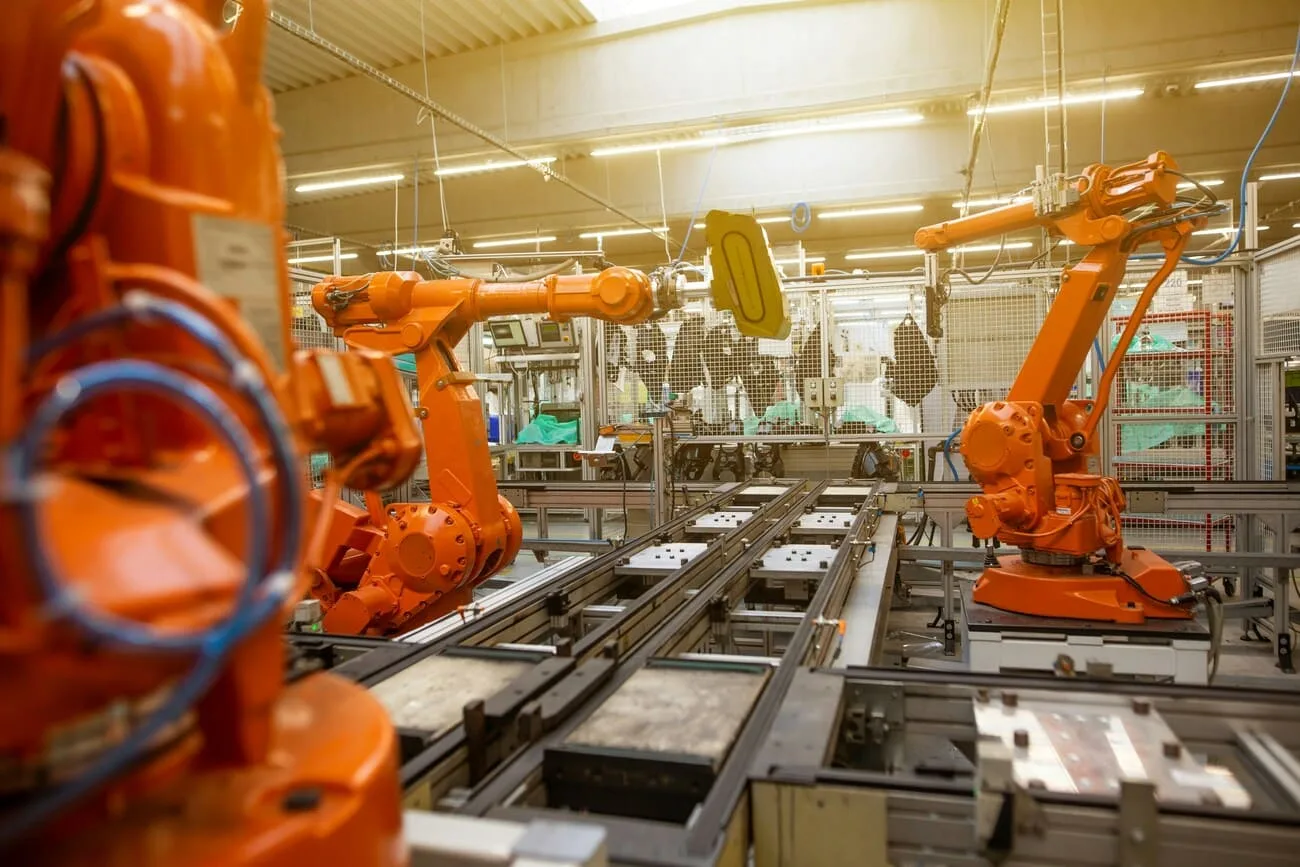
An industrial palletizing robot is a high-speed robot specifically designed to perform palletizing tasks in intensive production environments.
These robots are usually part of fully automated robotic cells that include conveyors, box handling systems, and safety devices.
Unlike cobots, industrial robots are not designed to work directly alongside operators, so they typically require safety fencing or protection systems.
However, in return they offer higher speed, greater payload capacity, and better performance in high-volume processes.
Key features of an industrial palletizing robot
Industrial palletizing robots stand out for:
High operating speed
High payload capacity
High repeatability and precision
Ability to work in continuous cycles
Integration into high-production automated lines
This type of robot is very common in sectors such as:
food and beverage
logistics
chemical industry
construction materials
fast-moving consumer goods
Differences between a palletizing cobot and an industrial palletizing robot
Although both technologies automate palletizing, there are key differences that can influence the choice between one solution or the other.
Safety
Cobots are designed to work close to people and include built-in safety systems that limit the robot’s force and speed.
In contrast, industrial robots operate at much higher speeds and with greater loads, so they usually require robotic cells with safety fencing.
Palletizing speed
Speed is one of the most important differences between both technologies.
Cobots: medium speed, suitable for moderate production.
Industrial robots: very high speeds, capable of handling large production volumes.
For this reason, industrial robots are usually used in high-capacity production lines.
Payload Capacity
Industrial robots typically have much higher payload capacities than cobots.
While many cobots handle loads from 10 to 30 kg, industrial robots can handle up to 100 kg or more, depending on the model.
This makes them more suitable for heavy products or multiple handling tasks.
Flexibility
In terms of flexibility, cobots are usually superior.
Their simple programming allows quick changes to the palletizing pattern or adaptation to new box formats without complex programming.
They are therefore widely used in environments with:
frequent product changes
small batch production
quick reconfiguration needs
Required space
Cobots usually require less space, as their installation is more compact and they do not always require safety fencing.
In contrast, industrial robotic cells usually take up more space due to protection systems and additional integrated equipment.
Comparison: palletizing cobot vs industrial palletizing robot
| Feature | Palletizing cobot | Industrial palletizing robot |
|---|---|---|
| Safety | Can work near operators with collaborative safety measures | Requires safety fencing or cell in most applications |
| Speed | Medium, suitable for moderate production | High, ideal for high-volume lines |
| Payload Capacity | Low to medium | Medium to very high |
| Flexibility | Very high, easy to adapt to product changes | Medium, more oriented to stable processes |
| Programming | Simple and intuitive | More technical and specialized |
| Required space | Reduced | Larger installation space |
| Production type | Medium, variable, or frequently changing production | High and continuous production |
| Initial investment | Generally lower | Generally higher |
When to choose a palletizing cobot
A collaborative robot for palletizing is usually the best option when a company needs a flexible and easy-to-integrate solution.
Cobots are especially suitable when:
production is medium or low
there are many format changes
plant space is limited
progressive automation is desired
interaction between robot and operator is required
For these reasons, cobots are gaining popularity in SMEs and flexible production lines.
When to choose an industrial palletizing robot
An industrial palletizing robot is more suitable when maximum performance and production capacity are required.
This type of robot is mainly used when:
production is high or very high
products are heavy
high palletizing speed is required
the system is part of a fully automated line
In these cases, industrial robots offer higher productivity and reliability in continuous operations.
Palletizing automation: a strategic investment
Regardless of the chosen technology, palletizing automation offers multiple benefits for companies:
increased productivity
reduction of workplace injuries
improved ergonomics
greater consistency in product stacking
end-of-line optimization
For this reason, more and more companies are incorporating palletizing robots or palletizing cobots to optimize their logistics processes.
Conclusion
Both palletizing cobots and industrial palletizing robots are effective solutions for automating the end of the line.
The choice between one or the other will mainly depend on factors such as:
product type
product weight
required speed
production volume,
level of plant automation
While cobots stand out for their flexibility, ease of use, and fast implementation, industrial robots offer higher speed and capacity for intensive production environments.
Correctly evaluating these variables will allow you to select the most suitable palletizing solution for each application.
Discover our end-of-line automation solutions
Contact us and we will help you carry out the analysis with no obligation.
Request a free consultation